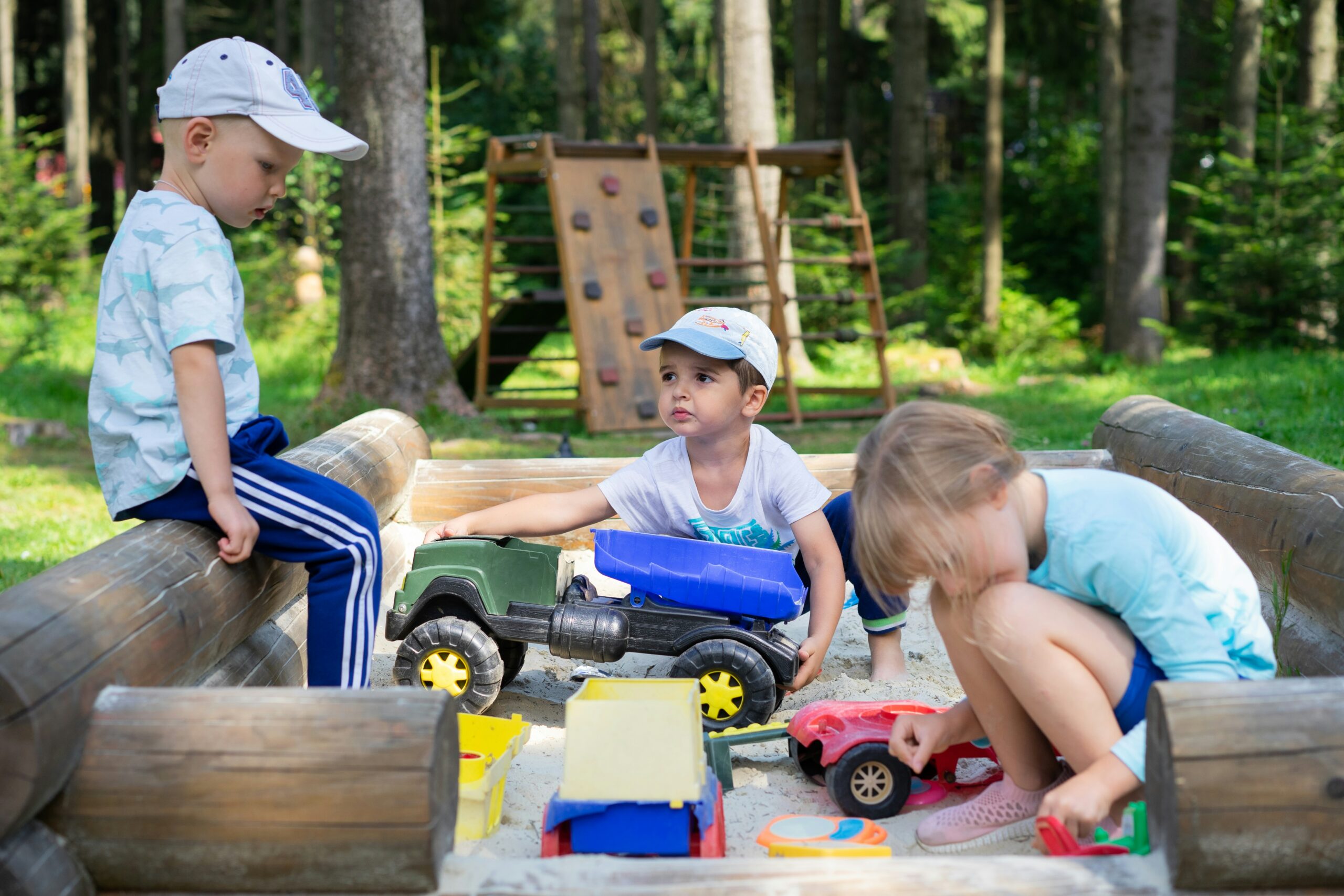
Play is a significant part of a child’s life. When we talk about play, many people assume all play is the same. But in early childhood, the type of play a child engages in can make a big difference in their development.
Play refers to a form of gross motor or total body movement in which young children exert energy in a freely chosen, fun, and unstructured manner. Two common types of play you may hear about are free play and structured play. While they sound similar, they are not exactly the same. Understanding the difference can help parents, caregivers, and teachers support children more effectively.
Free or Unstructured Play
Free play can also be referred to as spontaneous or unstructured play. This is the epitome definition of play, manifesting when a child can freely engage in play. Unstructured or free play happens when children are given the time, space, and materials to play without fixed rules, instructions, or adult-led goals.This type of play has virtually unlimited boundaries for children. Unstructured play is of great benefits to both children and their families.
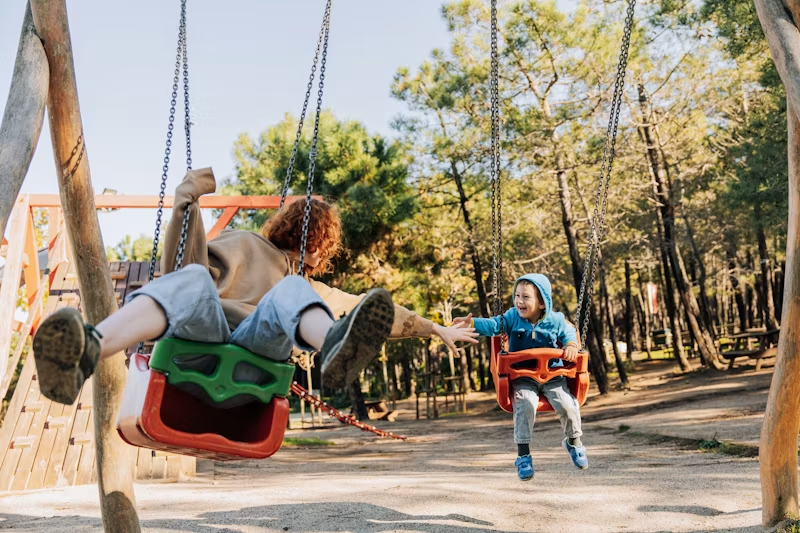
Benefits of Unstructured Play
- Promotes socialization and helps children learn social and cultural norms (acculturation)
- Supports personal development, including independence and confidence
- Contributes to learning and informal education through exploration and experience
- Provides relaxation and reduces stress
- Gives children the freedom to play independently without strict rules or direction
- Exposes children to a variety of sensory and environmental stimuli
- Helps increase overall levels of physical activity
- Improves gross motor skills such as running, jumping, climbing, and balancing
Examples of Unstructured Play
Creative building play: Children make use of materials like blocks, LEGO, sand, or recycled items to build anything they imagine, without following a set design or blueprint.
Junk and adventure playgrounds: This are also designed specifically to support unstructured play. These spaces are quite different from traditional playgrounds, which tend to be more organized and structured in how they are used.
Make-believe play: children might engage in pretend or make-believe play, such as acting out roles like being teachers, parents, doctors, or superheroes. They create the story themselves and decide how the play unfolds.
Outdoor exploratory play: This includes activities such as running around in open spaces, climbing trees, playing in the sand, or simply exploring nature at their own pace.
Structured Play
Structured movement sessions, also known as “deliberate practice,” are carefully planned activities aimed at improving performance. They require effort and focus, both mentally and/or physically, and are intended to support the development of positive skills. This refers to play that is initiated and directed by adults. It is typically adult-led and includes activities designed for a specific purpose.
Structured play involves the presence of a trained instructor who stays in the supervised playground area. This instructor provides support when necessary, gives instructions on how to use equipment, and encourages children to explore different activities and challenges safely and confidently.
Structured play often follows a planned sequence of activities designed to help children develop specific physical skills.
Benefits of Structured Play
- Supports the development of specific skills through guided activities
- Improves physical abilities such as balance, coordination, strength, and agility
- Encourages focus, discipline, and following instructions
- Provides clear goals and learning outcomes for children
- Helps children build problem-solving skills within set rules or tasks
- Promotes safe learning under adult supervision and guidance
- Enhances cognitive development through planned and purposeful activities
- Builds confidence as children achieve set tasks step by step
- Supports social development through organized group activities and teamwork
Examples of Structured Play
- Manual dexterity circuit: In this type of activity, children move from one piece of equipment to another in a fixed order. This might include rope ladders, climbing ropes, hanging bars, gymnastic rings, climbing nets, and monkey bars. Children usually spend a short, timed period on each activity before moving on.
- Balance circuit: Here, children follow a set pattern using equipment such as balance beams, balance logs, elastic beams, and balance platforms. This sequence is often repeated several times to help strengthen coordination and stability.
Comparing Free and Structured Play
In today’s world, children’s schedules are becoming more structured, with less time for play. However, play is not just a way to pass time, rather it is a key part of how children learn and grow.
One key benefit of free play over structured play is that it allows children to be spontaneous and explore freely. The environment is always changing, which keeps their experiences fresh, interesting, and engaging. This kind of play not only excites children but also gives them a sense of control and confidence as they make their own choices. As a result, unstructured play may produce more beneficial outcomes for children compared to structured play, especially in areas like creativity, independence, and problem-solving.
Structured play, on the other hand, is usually guided by an adult and follows a clear plan or set of rules. It is designed with specific goals in mind, such as improving coordination, balance, or other targeted skills. This type of play helps children build focused competencies in a more guided and purposeful way.
Instead of choosing one over the other, parents, caregivers, and teachers should aim to provide opportunities for both types of play. For example:
- Allow time for indoor free play with toys and creative materials
- Provide outdoor time where children can explore without strict rules
Conclusion
The balance of both structured and free play is necessary for healthy learning and development at such a crucial age in life. Rather than choosing one over the other, the most effective approach is balance. Free play supports creativity and emotional growth, while structured play supports skill development and guided learning. When combined, they provide a more complete and well-rounded developmental experience for children.
By allowing children the freedom to play in different ways, we are helping them build the skills they need for life such as creativity, confidence, resilience, and social understanding.